What to Notice on Your First Visit to a Cycle Club
A first visit to a cycle club can help you judge the pace, welcome, and practical arrangements, so you can choose a ride that fits your comfort.
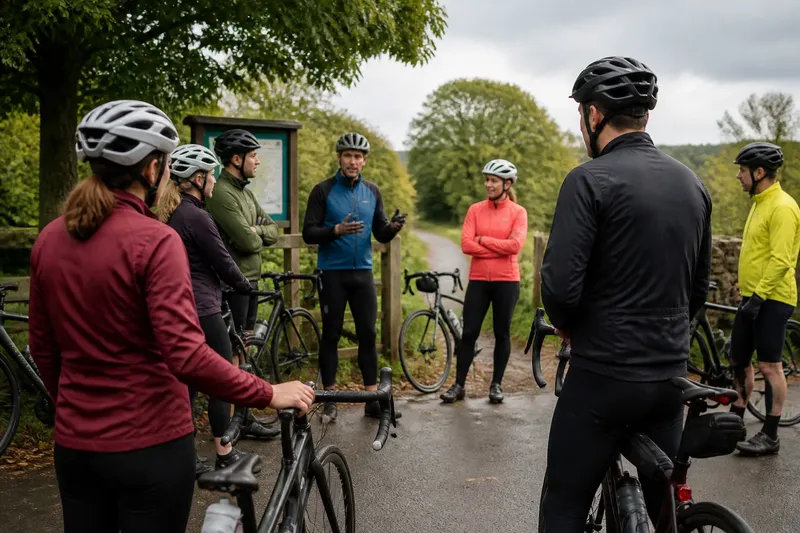
Will a first visit to a cycle club feel welcoming, and will the ride suit you? Before you join, you can learn a lot by watching where people gather, how the ride is explained, and whether anyone makes room for a newcomer’s questions.
You do not need to arrive ready to sign up or prove your riding ability. Treat the visit as a chance to see how the group operates in ordinary moments and decide whether its style fits your preferences and comfort.
Read the gathering
Notice how the meeting place works before the ride begins. Is there an obvious person to greet, or do riders seem to know exactly where to stand? A club might meet outside a café, at a park entrance, or beside a station. If the spot is busy, ask who is leading the ride and where the group plans to gather.
Look for practical signs of welcome rather than a particular style of greeting. Someone might introduce themselves, ask whether you have ridden with the club before, or point out where the group will set off. A quieter welcome can be genuine too; people may be checking bikes, greeting friends, or listening for route details. What matters is whether you can get basic information without having to interrupt a tight circle.
Pay attention to how members speak to one another. Do they make room for different opinions and riding backgrounds? Is a question treated as ordinary, or does it prompt teasing? One exchange cannot tell you everything, but repeated small interactions can reveal whether the club feels relaxed, competitive, formal, or some blend.
Understand the ride
A useful briefing gives visitors a picture of the outing before anyone rolls away. Listen for the destination or route, the expected pace, the kind of roads involved, and what the group does if it becomes spread out. You may also hear whether riders regroup at turns, how the leader signals a change of direction, and whom to approach if you need to leave early.
Labels such as “easy” and “steady” mean different things to different riders. Notice whether the leader explains them in concrete terms, such as a conversational pace or a route with frequent stops. It also helps to know whether the outing is social or focused on training.
Say you arrive expecting a relaxed café outing, but the briefing describes a brisk ride on busy roads with few stops. Ask about the route and pace, then decide whether to join, watch this time and ask about another ride, or head home. The briefing is a bit like a map: it cannot remove every surprise, but it can help you see what sort of journey you are choosing.
Notice how the group handles uncertainty. A clear answer about a confusing junction or a slower rider can tell you how members communicate and regroup when plans change. You do not need a promise that every ride will go perfectly; you do need enough information to understand the group’s approach.
Watch newcomer habits
Hospitality is not only a friendly hello. Watch whether someone checks that visitors know where to position themselves, introduces them to a ride leader, or explains a club custom without making a fuss. Those small gestures help a newcomer take part without guessing what everyone else already knows.
Notice whether the group expects visitors to keep pace without explaining what that pace means. A considerate club makes room for riders to describe their experience honestly and choose an outing that suits them. If the only guidance seems to be “keep up,” the club may not match the kind of riding you want, even if members are pleasant off the bike.
Do not judge the whole club by whether one person becomes your instant companion. Organizers may be busy, and members may be preparing to leave. Look for a pattern: is information available, are newcomers acknowledged, and can you ask for help without being made to feel burdensome?
Ask before you ride?
Can I join a ride as a visitor?
Ask whether visitors may join and whether you need to contact an organizer or register beforehand. The answer tells you what to do next: follow the stated sign-up process, or ask about another way to visit if you are not ready to ride.
Which ride fits my experience?
Describe the pace, roads, and ride length you are comfortable with, then ask which outing suits you. If the recommendation is specific and clear, you can compare it with your preferences; if it remains vague, ask for more detail before deciding.
What should I bring?
Ask what the club expects riders to carry and whether the route includes planned stops. A helmet, water, a charged phone, and a way to deal with a puncture are common considerations, but let the route and the organizer’s advice guide your choices.
What costs or insurance apply?
Ask whether visitors face membership dues, ride fees, or other costs, and what cover applies to them. If a policy or local rule affects your decision, request the relevant details from the organizer and consult a qualified professional where needed.
Check the practical fit
Consider how the club’s routine would fit your life. Where do rides start, and can you reach the meeting point? Are outings scheduled at times you can manage? Does the group offer shorter routes or a steady-paced option? These details help you judge whether a friendly first impression could become a workable routine.
- Check whether the meeting place is clear; if you can identify it and the ride leader, follow the meeting instructions, but if not, contact the organizer before setting out.
- Check whether the route and road types are explained; if they suit your comfort, consider joining, but if they do not, ask about another ride or sit this one out.
- Check what “steady” or “easy” means to this group; if the pace is described in terms you understand, compare it with your ability, but if it stays vague, ask for a more specific explanation.
- Check how the group handles turns and riders who become separated; if the plan is clear to you, decide whether you are comfortable following it, but if not, ask the leader to explain before departure.
- Check how visitors register and whether any fee applies; if the arrangement is clear and acceptable to you, proceed as directed, but if not, ask for the details or choose another outing.
- Check whether you can contact an organizer and get route information; if both are available, keep the details handy, but if either is missing, request them before relying on the ride plan.
Imagine you are new to group rides and prefer quiet roads. The organizer tells you the club meets at a park entrance, the outing uses busier roads, and a separate social ride follows a quieter route. You ask whether visitors should register and learn that you need to message the ride leader first. Your decision is to skip the first outing, contact the leader about the quieter ride, and bring the suggested equipment if you attend. You have a concrete next step without pretending the first ride was the right fit.
Ask how the club shares information after the briefing. A route sheet, posted map, or message with meeting details can help you plan. Find out how to contact an organizer if you arrive late or want to ask something privately. A clear, dependable channel may matter more than a polished online presence.
You can also ask about shared road habits: how riders signal hazards, whether they ride two abreast where appropriate, and how leaders respond if traffic or road conditions change. The point is to understand expectations well enough to decide whether you can follow them comfortably.
Choose your next move
A first visit is information, not an audition. You can stay for the briefing and leave before the ride, or join if the pace and arrangements feel right. If you do ride, tell the leader you are new and ask where to position yourself. You can change your mind if the outing feels different from what was described.
Afterward, note what you noticed while it is fresh: whether you felt able to ask questions, whether the ride matched its description, and whether the routine suits your schedule. You might return, try a different ride, or look for another club. Each is a reasonable choice.
On a first visit to a cycle club, clear information matters more than a perfect welcome or a flawless ride. If you leave knowing whom to contact, what outing to ask about next, and what questions remain, you have a useful basis for deciding whether to join.